
Do not compare the headline totals of two laser cleaning machine quotations until both suppliers have defined the same machine configuration and supply scope. A meaningful laser cleaning machine cost comparison separates the laser source, cleaning head, controls, cooling method, accessories, delivery, installation, training, warranty, spare parts, and support. If one quotation includes an item and another leaves it unstated, the lower total is not yet the lower-cost offer.
A request that says only “Please quote a 200W laser cleaner” leaves the application open. It does not identify the base material, contamination, required finish, work schedule, access limits, available utilities, or acceptance method. When we prepare a configuration, we start with the workpiece and the expected result. Buyers should ask every shortlisted supplier to quote against the same written requirements.
Compare the same laser configuration first
Rated output is only one specification. Before comparing quotations, confirm whether each offer covers a pulsed or continuous-wave system, the beam information relevant to that system, the supplied cleaning head and controller, the cooling arrangement, and the machine format. Two products carrying the same wattage label can be intended for different surfaces, workloads, or operating environments. Our laser cleaning machine range shows the pulsed and continuous-wave formats behind such quotations, so each offer can be checked against a real configuration.
Use the same configuration fields for every supplier:
- Application: Base material, residue or coating, layer condition, part size, and required surface result.
- Laser source: Pulsed or continuous-wave, rated output, and source identification.
- Beam information: Beam mode or profile terminology and, for a pulsed system, the pulse specifications needed to evaluate the proposed model.
- Cleaning head: Handheld or integrated design, available scan patterns, working-distance arrangement, and cable length.
- Cooling and utilities: Cooling method, electrical requirements, compressed-air requirements if applicable, and stated operating limits.
- Machine format: Backpack, suitcase, cabinet, wheeled, or automated system, with complete operating and transport weights clearly distinguished.
- Duty requirement: Expected operating hours, work area, access restrictions, and whether the equipment will be moved between jobs.
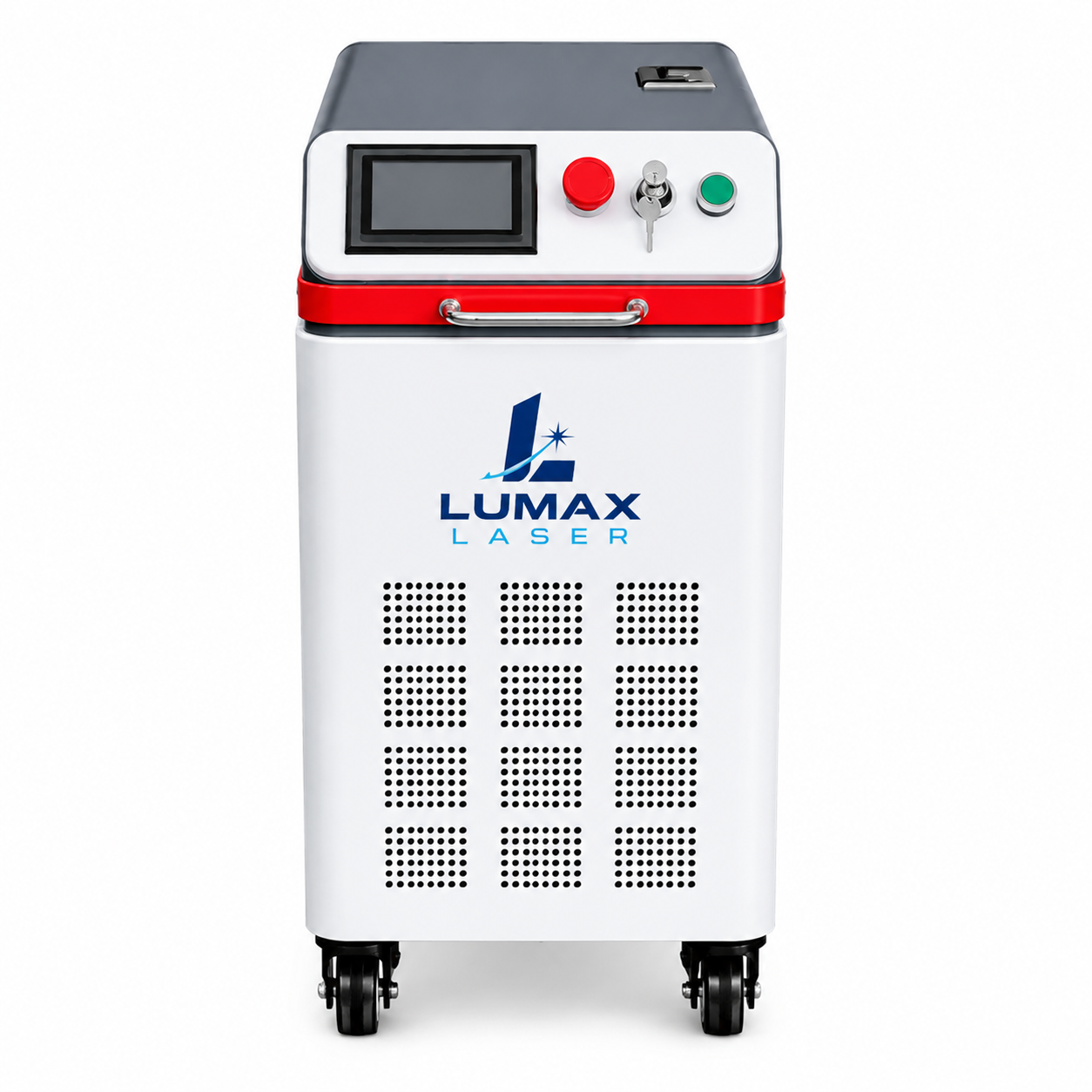
- Acceptance result: What must be removed, what surface condition must remain, and how the cleaned part will be inspected. For a practical reference, review the published configuration of our 200W Portable Laser Cleaning Machine and use the same categories when requesting another offer. This does not mean that model fits every application. It shows the level of detail needed to compare two proposals fairly.
When the base material, coating, or required finish is sensitive, request a sample test before final selection. The test record should identify the workpiece, starting condition, machine configuration, settings, number of passes, and acceptance result. Speed claims from different materials or different definitions of “clean” are not directly comparable.
Separate standard equipment from optional items
A base-machine figure is useful only when the included scope is explicit. Ask for a packing list or quotation appendix that separates standard equipment, optional equipment, and buyer-supplied items. “Complete set” is not precise enough because suppliers may use the phrase for different packages.
The equipment section should identify the laser source, cleaning head, controller, cooling unit, enclosure or carrier, cable assembly, and the electrical components included with the proposed model. The accessory section should state whether protective optics, tools, spare protective windows, hoses, connectors, storage cases, or initial consumables are included. The safety section should list the protective devices and equipment supplied with the machine. Workplace controls must still be evaluated for the actual site and application by qualified personnel.
Ask the supplier to label every option as included, optional, not required for the defined job, or to be quoted. This is especially important for extraction and filtration, alternative cable lengths, additional cleaning heads, automation interfaces, fixtures, custom electrical arrangements, packaging, and spare-parts kits. A blank line is not a free item; it is an unanswered commercial question.
If mobility matters, compare the full operating setup rather than the enclosure alone. Our portable laser cleaning machine selection guide explains the practical differences among backpack, suitcase, and other movable formats. The quotation should name the exact format and distinguish what the operator carries, rolls, positions, and connects during a normal job.
Define delivery, installation, and commissioning
Two suppliers can quote the same machine but assign different responsibilities after it leaves the factory. Ask each supplier to state the shipping term, origin, destination, packaging method, and party responsible for every stage. Freight, insurance, customs clearance, duties, and local delivery should be shown as separate responsibilities. Import charges depend on destination, classification, and current rules, so they should not be assumed from a machine quotation alone.
Then define what happens after arrival. The quotation should say whether the supplier provides written setup instructions, remote guidance, on-site installation, commissioning, or acceptance testing. It should also state what the buyer must prepare and which services require a separate quotation.
Confirm these handover points:
- Site readiness: Electrical supply, grounding, workspace, ventilation or extraction, access, and lifting arrangements.
- Installation responsibility: Who unpacks, positions, connects, and checks the system.
- Commissioning scope: What functions are tested, which workpiece is used, and what acceptance record is produced.
- Schedule basis: What starts the production schedule, how dispatch is defined, and which buyer-side conditions can delay handover.
- Documentation: Packing list, operation manual, wiring information, maintenance documents, and any other agreed records.
- Travel-related services: Whether travel, accommodation, local transport, and interpretation are included, excluded, or separately quoted. A quotation can require substantial buyer-side work even when the machine configuration is suitable. Assigning every task to a named party prevents unloading, electrical work, extraction, setup, or operator preparation from being discovered after delivery.
Put warranty, training, and support in writing
“Warranty included” is not a complete term. Ask for the warranty period, start date, covered components, exclusions, claim procedure, and responsibility for parts freight, labor, and travel. These details should appear in the final quotation or an attached policy that the quotation references.
Training also needs a defined scope. Record whether it covers startup, routine operation, parameter-selection principles, shutdown, basic inspection, maintenance boundaries, and safety procedures. Confirm the format, language, participant basis, and training materials. The final written quotation should control whenever a general sales statement differs from model-specific service terms.
Maintenance information should match the quoted model. Request the manufacturer’s maintenance schedule, expected replacement items, recommended spare parts, and parts-ordering process. Do not assume that replacement optics, a spare-parts kit, future software updates, or on-site service are included unless the quotation says so.
Use the same support questions for each supplier:
Who receives the first service request, and through which channel?
What machine identification and diagnostic information must the buyer provide?
Which issues can be handled remotely, and which require parts or on-site work?
Where are replacement parts dispatched from, and how are availability and freight confirmed?
Which buyer actions can affect warranty coverage?
What documentation is supplied for routine inspection and maintenance?
Specific answers are more useful than a broad promise of “lifetime support.” A written process tells the buyer who acts, what information is required, and which costs or responsibilities remain outside the quoted scope.
Normalize every quotation in one worksheet
Transfer each supplier’s answer into the same rows. Do not leave blank cells. Mark an unanswered item as “not stated” and a required but unpriced item as “to be quoted.” This removes assumptions from the comparison.
| Category | Comparison line | Supplier A | Supplier B |
|---|---|---|---|
| Equipment | Laser type and output | Stated / missing | Stated / missing |
| Equipment | Source identification | Confirmed / open | Confirmed / open |
| Equipment | Head and controller | Included / option | Included / option |
| Utilities | Cooling and power | Stated / missing | Stated / missing |
| Accessories | Packing list | Attached / missing | Attached / missing |
| Accessories | Spare-parts kit | Included / option | Included / option |
| Safety | Supplied equipment | Listed / missing | Listed / missing |
| Delivery | Shipping basis | Defined / unclear | Defined / unclear |
| Delivery | Freight and insurance | Included / quote | Included / quote |
| Delivery | Customs and local leg | Assigned / unclear | Assigned / unclear |
| Handover | Setup and testing | Included / option | Included / option |
| Training | Format and scope | Defined / unclear | Defined / unclear |
| Support | Warranty terms | Attached / missing | Attached / missing |
| Support | Service channels | Defined / unclear | Defined / unclear |
| Support | Parts process | Defined / unclear | Defined / unclear |
Add the quotation date, validity period, payment milestones, and revision number outside the technical matrix. These are necessary commercial controls, but they do not prove that two machines or supply scopes are equivalent. Compare the technical configuration first, delivery and handover second, and commercial terms third.
Close every material gap before purchase
Send the same clarification list to each shortlisted supplier. If an answer changes the configuration or supply scope, ask for a revised quotation rather than relying on a separate message.
Is the offer based on the workpiece photos, contamination details, and required finish we supplied?
Which exact laser type, rated output, source, cleaning head, controller, and cooling arrangement are quoted?
Which specifications still depend on a sample test or technical confirmation?
What is included in the standard package, and what is optional?
What safety equipment is supplied, and what site controls must the buyer provide?
What electrical, ventilation, extraction, access, and workspace conditions are required?
Which shipping term and delivery point apply, and who handles each logistics stage?
Are installation, commissioning, and acceptance testing included? What is the written scope?
What training is included, and in which format and language?
When does warranty coverage start, what does it cover, and what is excluded?
How are replacement parts, remote diagnosis, and on-site service requested?
Which documents will be delivered with the machine?
Which required items remain “to be quoted”?
How will a change in the workpiece or configuration be documented and priced?
Do not negotiate the headline total while important scope lines remain open. First remove duplicate options, add missing requirements, and align the delivery basis. Then compare revised offers. This sequence protects the intended cleaning result and gives the purchasing team a cleaner basis for negotiation.
To request a defined-configuration quotation from us, send the destination country, workpiece material, residue or coating, required finish, part dimensions, expected workload, site utilities, access limits, and mobility requirements through our website contact form. Photos and sample parts help us identify what must be tested or confirmed before we prepare the final scope.
FAQ
Why do laser cleaning machine quotations vary?
Quotations may cover different laser types, output classes, beam configurations, machine formats, accessories, delivery responsibilities, commissioning, training, warranty, and support. Compare the same written scope line by line before deciding which offer has the lower laser cleaning machine cost.
Should I compare laser cleaning machines by wattage?
No. Wattage alone does not define the laser type, beam characteristics, cleaning head, cooling system, operating format, or suitability for a workpiece. Use a complete configuration sheet and request a documented sample test when the surface result cannot be confirmed from specifications alone.
What information should I send for an accurate quotation?
Send the destination country, base material, contamination type and condition, required surface result, part dimensions, expected workload, available utilities, access constraints, and preferred machine format. Photos or sample parts can clarify the application and the test requirements.
What should a laser cleaning machine quotation include?
A useful quotation identifies the machine configuration, standard equipment, optional items, packing list, delivery basis, installation and commissioning scope, training, warranty, maintenance documentation, spare-parts process, support boundaries, commercial terms, and every required item that is still to be quoted.