
Choose laser cleaning when the job requires controlled contaminant removal while retaining the existing surface profile, avoiding abrasive media, or working near components that should not be mechanically abraded. Choose sandblasting when the work covers broad structural-steel areas and the next coating system requires a specified anchor profile. Neither method wins every comparison. The right answer follows the required surface after cleaning, the part geometry, the acceptable waste stream, and the complete workflow—not a headline about speed or cost.
At Lumax Laser, we start with the finished surface. “Remove the rust” is not a complete requirement. A purchasing team should also define whether the cleaned part will be inspected, welded, recoated, assembled, stored, or returned to service. That downstream step determines whether preserving an existing finish or deliberately creating a new profile matters more.
| Decision factor | Laser cleaning | Sandblasting |
|---|---|---|
| Primary effect | Selective layer removal | Mechanical removal and profiling |
| Surface profile | May retain existing profile | Can create anchor profile |
| Consumable media | No abrasive media | Abrasive media required |
| Airborne material | Fume and fine particles | Media, coating and substrate dust |
| Waste stream | Captured residue and filters | Spent media plus removed material |
| Access limits | Beam path and laser-safe area | Nozzle, hose and containment |
| Best evidence | Matched sample and endpoint | Matched sample and endpoint |
The required surface profile decides the process
Laser cleaning and sandblasting remove contamination through different interactions. Laser cleaning is non-contact: the beam delivers energy to the surface layer, and the selected parameters determine how the coating, oxide, or residue responds. Sandblasting directs abrasive particles at high velocity. Those particles remove material mechanically and can change the surface texture at the same time.
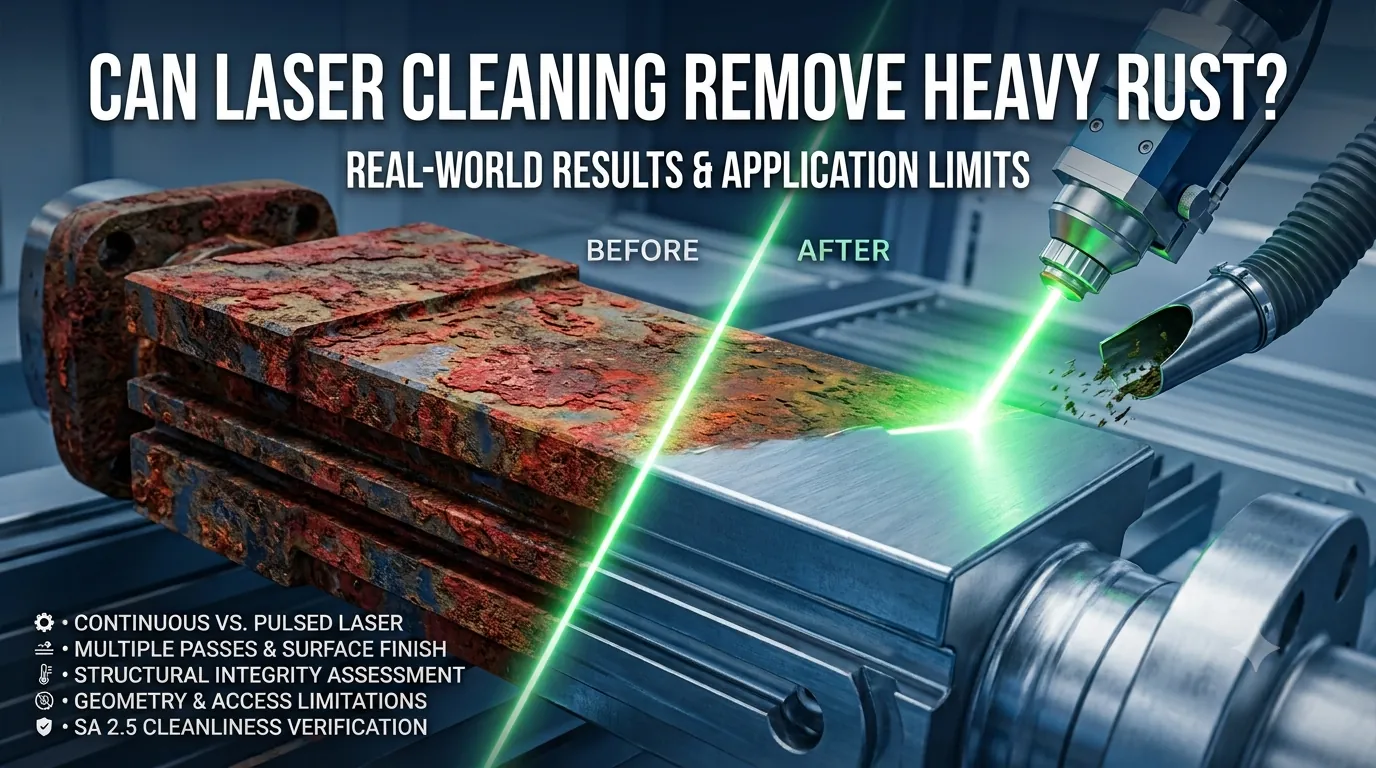
That difference becomes decisive when a drawing, coating specification, or inspection plan defines the finish. A validated laser process may remove a target layer while retaining much of the existing substrate profile. The word “validated” matters. Excessive energy input, poor focus, too much overlap, or an unsuitable process window can discolor, melt, pit, or otherwise change a substrate. Research on laser-cleaned steel also shows that a higher energy density can move the result from incomplete removal to effective cleaning and then to substrate damage. A sample test should confirm the result on the actual material and contamination.
Sandblasting is often selected precisely because it creates a mechanical profile. For many coating systems, that anchor pattern is part of the preparation requirement rather than an unwanted side effect. If the specification calls for a defined blast-cleanliness grade and profile, cleaning to a visually bright surface with a laser does not automatically satisfy it. The coating manufacturer’s data sheet, the project specification, and the inspection method remain the controlling documents.
For delicate tooling, machined surfaces, localized weld areas, or parts whose dimensions should not be changed by abrasive impact, laser cleaning may offer a more controllable route. For heavily scaled structural steel that must receive a high-build protective coating, blasting may remain the practical first choice. A combined workflow is also possible: one method can handle broad preparation and the other localized correction, provided the final surface is inspected against one acceptance standard.
Geometry and access change the practical choice
Portable does not mean unrestricted. Both processes need access to the surface, but their constraints differ. A laser operator must maintain the intended beam path, working distance, scan coverage, and a controlled laser area. Reflective surroundings, gaps that expose equipment behind the workpiece, and surfaces that cannot be viewed or reached directly need special planning. The operating area must also control direct and reflected laser radiation.
A blasting nozzle also needs a usable angle and stand-off, but the hose, compressor, media supply, and containment system shape what can be reached. Abrasive media can enter bearings, electrical cabinets, threaded holes, seals, ventilation openings, and assembled mechanisms. Masking and containment can make blasting effective, but those steps belong in the time and risk calculation.
Use the geometry review to ask practical questions. Can the operator see the entire target area? Are there deep cavities, narrow channels, fins, or undercuts? Must nearby seals, wiring, sensors, coatings, or polished surfaces remain untouched? Can the part move into a booth, or must the process come to an installed asset? Is there room for extraction or blast containment? The answer often becomes clear before machine power is discussed.
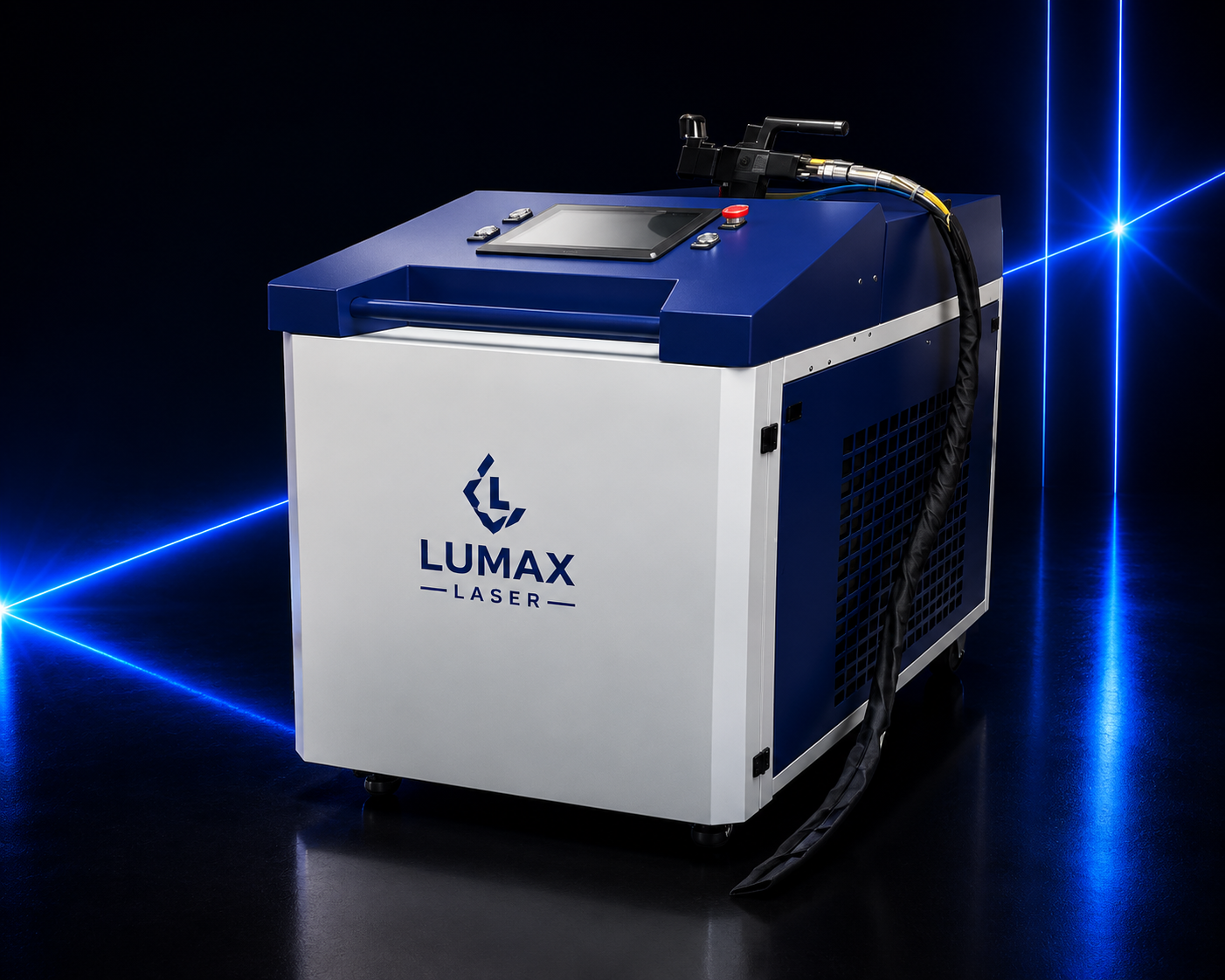
For a portable equipment starting point, review our 200W portable laser cleaning machine. Compare it with other formats in our laser cleaning machine range. A product page cannot prove that a specific part is suitable, so we still evaluate the material, contaminant, access, and acceptance criteria before recommending a test.
No abrasive media does not mean no emissions
Laser cleaning does not consume abrasive media. That removes the need to buy, transport, load, recover, and dispose of spent grit. It does not make the process waste-free. Removed rust, coating, oil, or residue becomes airborne material, deposited debris, or captured material in the extraction system. Used filters and captured contaminants still require handling that matches the substance removed and the site’s environmental and occupational rules.
Sandblasting creates a larger mixed waste stream because removed material combines with spent or fractured abrasive. Dust can contain material from the abrasive, the substrate, and the coating. OSHA guidance for abrasive blasting warns that airborne hazards depend on all three sources. Replacing silica sand with another abrasive may reduce one hazard while leaving or introducing other metal and coating contaminants.
Laser processing also requires source capture. Laser-generated air contaminants can include metallic fumes, dust, chemical fumes, and aerosols, depending on the target material. Local or area ventilation should keep airborne contaminants within the applicable exposure limits. The extractor and filter arrangement therefore depends on what is being removed, not merely on the laser’s rated power.
A fair facility comparison lists every supporting item: compressor and air treatment, media delivery, containment, recovery, and cleanup for blasting; electrical supply, laser-safe controls, extraction, and filter service for laser cleaning. Personal protective equipment, training, exclusion zones, and waste procedures apply to both processes, although the hazards and controls differ.
Productivity only means something under matched conditions
A square-metre-per-hour figure is not useful unless both methods are measured against the same task. Thick layered corrosion, light flash rust, paint, oil, oxide, and mold residue are different removal problems. A speed test also changes when the endpoint is “visually clean,” “coating-ready,” “original profile retained,” or “specified anchor profile achieved.” Comparing unlike endpoints creates a misleading winner.
Use one workpiece or representative coupon for both trials and record the complete job, not only the seconds when the tool is active. Include setup, masking, process time, repositioning, media or filter handling, cleanup, inspection, and rework. If a blasting trial includes coating-ready profiling while a laser trial stops after contaminant removal, the results answer different questions.
A fair comparison records the full workflow
- Identify the substrate, thickness, heat sensitivity, existing finish, and protected dimensions.
- Describe the contaminant by type, thickness or severity, coverage, and adhesion—not simply as “rust.”
- Set one acceptance endpoint and inspection method, including cleanliness, profile, color change, residue, and protected areas.
- Record setup, masking, active processing, repositioning, cleanup, inspection, and rework separately.
- Record consumables and waste streams without converting assumptions into cost-savings claims.
- Inspect the cleaned surface before deciding which method is more productive for the downstream step. We do not recommend choosing a process from an isolated demonstration video. A video may show that removal occurs, but it rarely proves the initial contaminant condition, final profile, number of passes, off-camera setup time, or inspection result. A controlled sample test gives purchasing, production, quality, coating, safety, and maintenance teams evidence they can review together.
Each method has jobs it should not take
Laser cleaning is the wrong choice when the job specification requires a blast-generated profile that the proposed laser process does not create. It may also be unsuitable when the contamination falls outside the validated process window, access prevents controlled beam delivery, the work area cannot be made laser-safe, or extraction cannot manage the material being removed. Heavy deposits over very large areas may make another process more practical, but that decision should come from a representative trial rather than a universal rule.
Sandblasting is the wrong choice when abrasive intrusion cannot be accepted, nearby assemblies cannot be protected, media containment or recovery is impractical, or the original surface profile must be retained. It may also be inappropriate where dust, noise, overspray, or access controls cannot be managed. Changing the abrasive changes the hazard profile; it does not remove the need for an industrial-hygiene assessment.
Sometimes neither process should proceed until the material is identified. Unknown coatings, hazardous residues, thin or heat-sensitive components, and safety-critical parts need a reviewed procedure. If a supplier cannot state what will be inspected after the test, the test plan is incomplete.
Specify the required surface before requesting a machine
Before asking for a recommendation, send the information that determines the process choice:
- Base material, grade if known, thickness, and current surface finish.
- Contaminant or coating type, approximate severity, coverage, and number of layers.
- Part dimensions, quantity, geometry, access restrictions, and whether the work is stationary or on site.
- Required post-cleaning condition, including cleanliness, profile, appearance, and protected features.
- Next operation: inspection, welding, adhesive bonding, coating, assembly, storage, or immediate service.
- Available power, extraction, containment, ventilation, and waste-handling controls.
- Acceptance method and the person responsible for technical sign-off. If the requirement is specifically to remove rust without introducing blast media, read our rust removal without sandblasting overview. For a method decision, send us photos of the workpiece and describe the target surface. We will advise whether laser cleaning is worth testing—or whether sandblasting remains the better call.
FAQ
Does laser cleaning leave the same surface profile as sandblasting?
No. Sandblasting mechanically changes the surface and can be specified to create an anchor profile. A validated laser process may retain much of the existing profile while removing a surface layer, but the result depends on the substrate, contamination, and selected parameters. Inspect a sample against the downstream coating or production requirement.
Is laser cleaning completely dust-free?
No. It uses no abrasive media, so there is no spent grit to collect, but the process can generate fumes and fine particles from the removed material. Appropriate source extraction, filtration, ventilation, and waste handling are still required.
Which method is faster for rust removal?
There is no honest universal answer. Compare the same rust condition, area, geometry, and acceptance endpoint, then include setup, active cleaning, repositioning, cleanup, inspection, and rework. Sandblasting may be practical for broad structural areas, while laser cleaning may reduce masking and media cleanup in suitable localized work.
Can laser cleaning replace sandblasting before painting?
Only when the proposed laser process produces the cleanliness and surface condition required by the coating specification. If the coating system requires a defined blast profile, laser cleaning alone may not meet that requirement. Confirm the preparation standard with the coating supplier and validate it on a representative sample.
Technical references
OSHA — Abrasive Blasting Hazards in Shipyard Employment
University of Michigan EHS — Laser Safety Guideline
Applied Sciences (2024) — Effect of Different Laser Parameters on 20 Steel